From Silt to Skyline: Umeda's Journey in 1889 to Today
"Architecture is the frozen music of a city's soul, and in Osaka, that melody has shifted from the rhythm of riverboats to the hum of high-speed elevators."
The Umeda Sky Building is far more than a steel-and-glass marvel; it is a vertical monument to Osaka’s transition from a water-bound mercantile hub to a global economic powerhouse.
By standing on the edge of the skyline, it bridges the gap between the city's ancient alluvial roots and its high-tech future.
* The structure mirrors Osaka's deep-rooted history as a commercial and cultural nexus. * It represents the modern zenith of Osaka's role as a gateway to Western Japan. * The building serves as a crucial physical touchpoint between deep regional history and contemporary economic vitality. * Its presence anchors the modern commercial renaissance of the Umeda district.

Roots in the Soil: Why was the ground once so different?
Walking through the Umeda district at 2:00 PM on a Tuesday, you feel the vibration of thousands of footsteps and the rush of subway lines beneath your feet, but the ground you stand on was once entirely different.
In the distant past, the very concept of a skyscraper would have been impossible because the land itself was a shifting landscape of water and silt.
During the Jōmon period (7,000 BCE), the area we now call Osaka was mostly submerged. The Uemachi Plateau (上町台地, Uemachi Daichi) formed a 12 km (7.5 mi) long and 2.5 km (1.6 mi) wide peninsula that separated Kawachi Bay from the Seto Inland Sea.
This geological reality meant that the "city" was essentially an archipelago of high ground surrounded by vast, watery expanses.
As the centuries passed, the city grew by reclaiming and managing these waters, evolving into a massive mercantile center. The transition from a coastal peninsula to a sprawling metropolis involved constant struggle against the elements.
The modern municipality, which when it was established in 1889 occupied an area of just 15 km2 (5.8 sq mi) including the districts of Chūō and Nishi, following three successive expansions has reached an area of 222 km2 (86 sq mi).
This expansion reflects a relentless drive to conquer the geography that once defined the region. The Umeda area, once a peripheral part of the growing city, eventually became the heart of its commercial engine.
The transition from the old river-based commerce to the modern rail-based commerce laid the groundwork for the density we see today. But how did a single building come to represent this massive shift in scale?
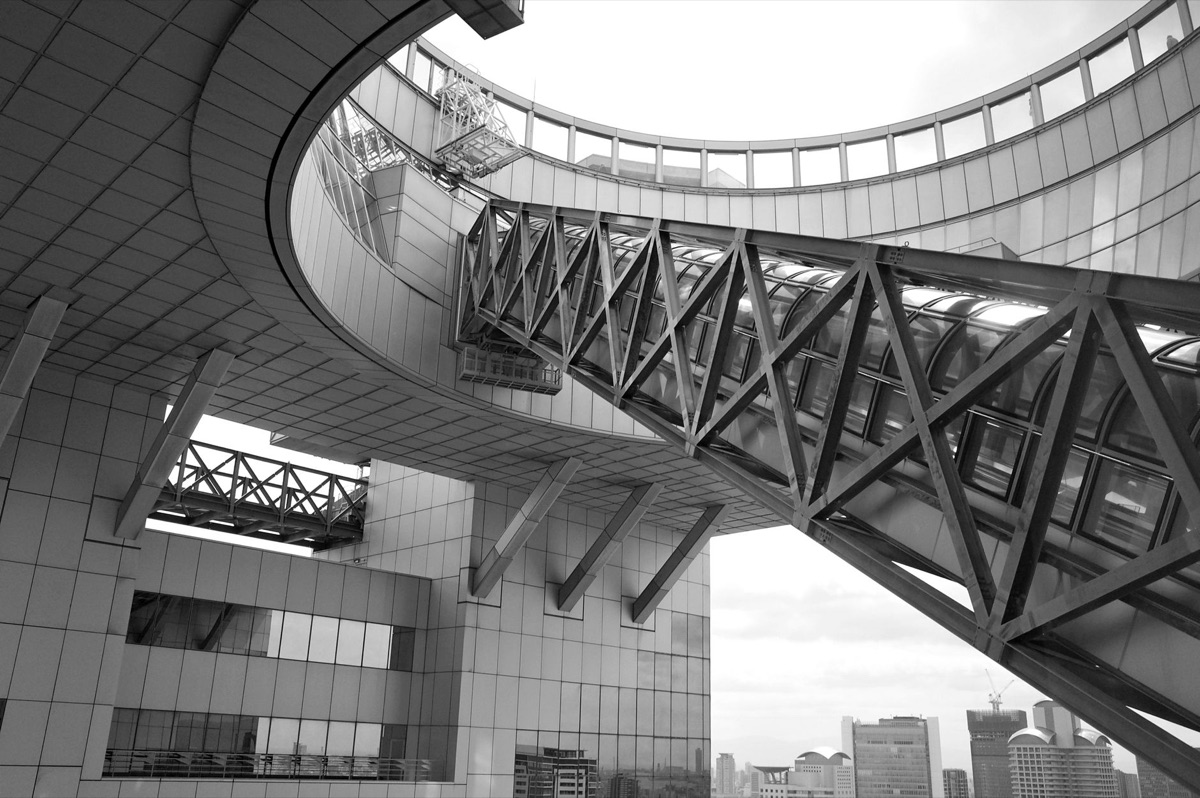
The Birth of Modern Umeda: What drove such an audacious design?
I remember standing at the base of the building during a sunset in late 2025, looking up at the two towers and wondering how they could possibly remain so stable while appearing so light.
The sheer audacity of the design reflects the era in which it was conceived—a time of rapid technological leaps and an appetite for redefining the skyline.
The construction of the Umeda Sky Building represented a pivot in Osaka's urban identity. It wasn't just about adding more office space; it was about creating a landmark that signaled the city's rebirth and its ability to compete on a global stage.
The architectural philosophy centered on the "Floating Garden Observatory," a concept that sought to bridge the gap between the solid earth and the vastness of the sky.
This period of development was driven by a need to consolidate the growing economic power of the Kansai region.
The building's completion served as a symbol of post-war economic resurgence, proving that Osaka could move beyond its traditional industrial identity into a future of high-design and service-oriented commerce.
It integrated seamlessly into the wider Umeda commercial ecosystem, acting as a magnet for the surrounding business districts. However, the real magic happens once you leave the ground behind.
A Modern Landmark: How does the scale of the city reveal itself?
The elevator ride to the top is a sensory experience, a quick transition from the bustling streets of Umeda to a silent, panoramic world of glass and light. Once you reach the observatory, the scale of the city reveals itself in a way that no street-level walk can provide.
According to World Bank data, Japan recorded a GDP per capita of US$35,951 in 2025.
In the 2026 travel season, the building remains a primary destination for those seeking a bird's-eye view of Japan's urban density.
Today, the building functions as a premier tourist attraction and a vital commercial hub. The observation decks offer a 360-degree view of the sprawling metropolis, allowing visitors to see the intersection of old neighborhoods and new developments.
This visual connection helps travelers understand the sheer scale of the urban density that defines modern Japan.
Beyond tourism, the building contributes significantly to the regional economy by hosting high-end dining and corporate offices. It attracts a constant stream of both domestic travelers and international visitors, serving as a primary destination in the Kansai itinerary.
The presence of such a landmark ensures that the Umeda district remains a vibrant, high-traffic area that supports local commerce and hospitality. But does this modern marvel truly connect to the city's soul?
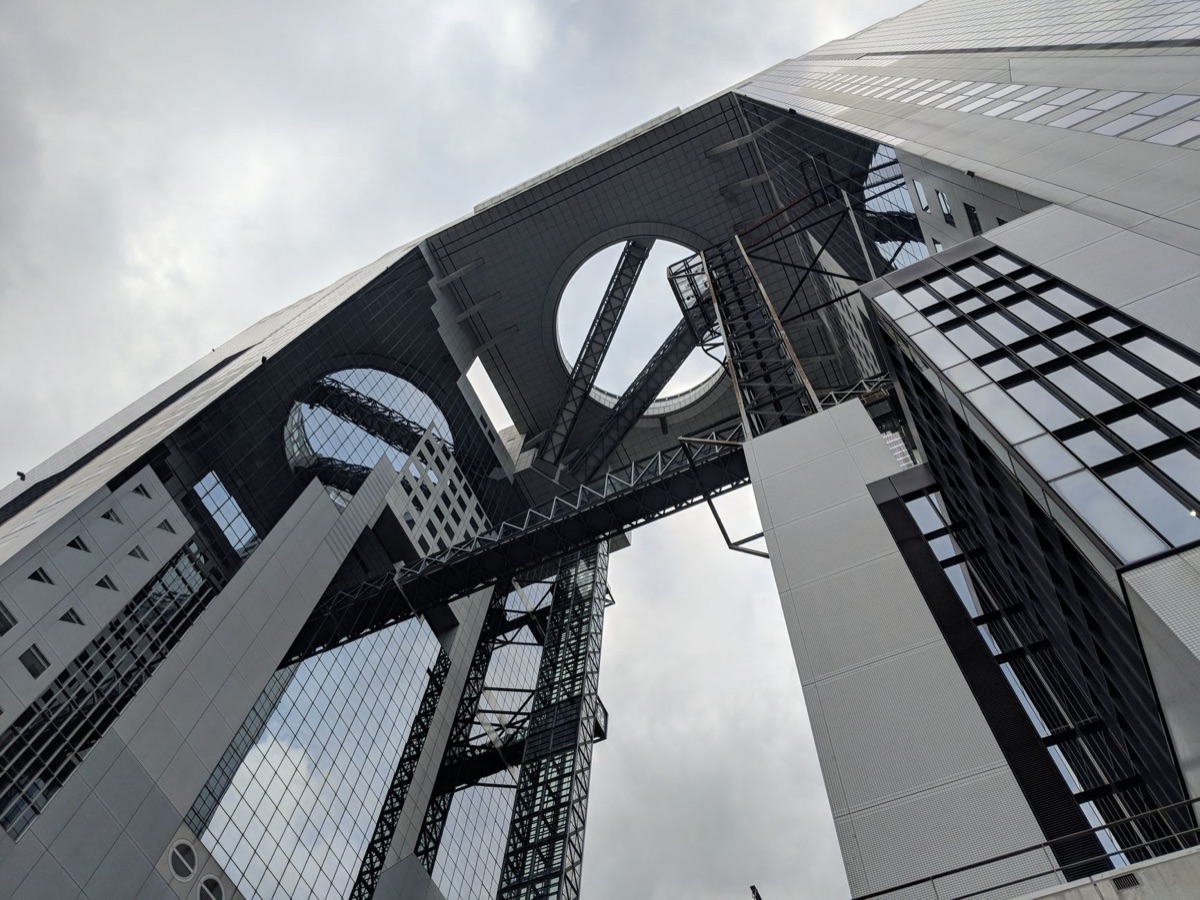
Echoes of the Past in Present Use: Is there a bridge between eras?
Looking out through the glass at the sprawling grid of the city, you can almost see the ghosts of the old canals and the original coastline that once defined the Uemachi Plateau. The building doesn't just sit on the land; it rises from the history of the people who transformed that land.
The design of the Umeda Sky Building, with its two towers connected by a bridge, subtly evokes the idea of connection—between the sky and the earth, and between the past and the future.
It maintains the "Kuidaore" spirit of Osaka by integrating sophisticated dining experiences that celebrate the city's food culture, ensuring that the tradition of commerce through gastronomy remains intact. There is a continuity in how Osaka handles growth.
The city has always been about resilience and dynamism, moving from a series of islands to a unified urban giant.
The building is a physical manifestation of that energy, a modern structure that respects the relentless momentum of the culture that built it. It is a testament to human ingenuity in the face of a changing landscape.
But what does this mean for the traveler trying to navigate the vastness of the Kansai region?
Umeda's Place in the Kansai Narrative: Beyond the building
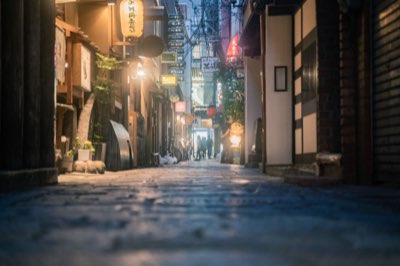
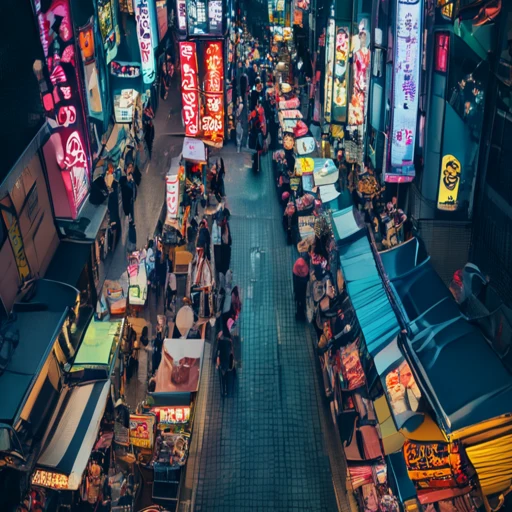
Stepping out of the building and back into the neon-lit streets of Umeda at 8:00 PM, you realize that the tower is just one piece of a much larger, interconnected puzzle.
The transition from the quiet heights of the observatory to the chaotic energy of the underground malls is a perfect metaphor for the city itself.
The Umeda Sky Building is a cornerstone of the broader Kansai travel narrative. It is often the starting point or the grand finale for travelers exploring the region, serving as a gateway to the wider Kansai area, including Kyoto, Nara, and Kobe.
Its location in Umeda makes it incredibly accessible, making it a natural hub for those moving between the historic temples of the east and the modern ports of the west.
It stands in conversation with other landmarks, from the historic Osaka Castle to the vibrant street food scenes of Dotonbori.
For the traveler, it provides the necessary perspective to understand how the various parts of the Kansai region fit together—the history, the economy, and the sheer human scale of the Japanese urban experience.
| Feature | Historical Context | Modern Significance |
|---|---|---|
| Primary Function | Land reclamation and commerce | Tourism, office space, and dining |
| Urban Role | Expanding the city boundaries | Anchoring the Umeda business district |
| Visitor Experience | Navigating a coastal/river landscape | High-altitude panoramic observation |
| Economic Impact | Building a mercantile hub | Driving regional tourism and service economy |
How to Experience the Sky: A Step-by-Step Guide
If you are planning a visit in 2026, follow these steps to make the most of your time at the Umeda Sky Building:
- Time your arrival: Aim to arrive at the base of the towers approximately 45 minutes before sunset to catch the transition from daylight to the city lights.
- Ascend the towers: Take the high-speed elevator to the Floating Garden Observatory to witness the changing light over the Osaka skyline.
- Walk the Sky Bridge: Experience the unique sensation of the open-air connection between the two towers.
- Dine with a view: Make a reservation at one of the high-end restaurants located within the building to experience the "Kuidaore" spirit at altitude.
- 5.s Explore the base: After descending, walk through the surrounding Umeda underground shopping malls to see the contrast between the sky and the subterranean city.
Limitations and Considerations
While the Umeda Sky Building offers unparalleled views, visitors should note that weather conditions can significantly impact the experience. In cases of heavy fog or rain, visibility may be limited to a few hundred meters, obscuring the city below.
Additionally, the high-speed elevators and the transition in air pressure can be uncomfortable for some travelers.
#



Comments 0